Package includes $22.3b power complex for AIDC, framework agreement on 8 US nuclear reactors and review of Seoul's possible participation in Alaska LNG project
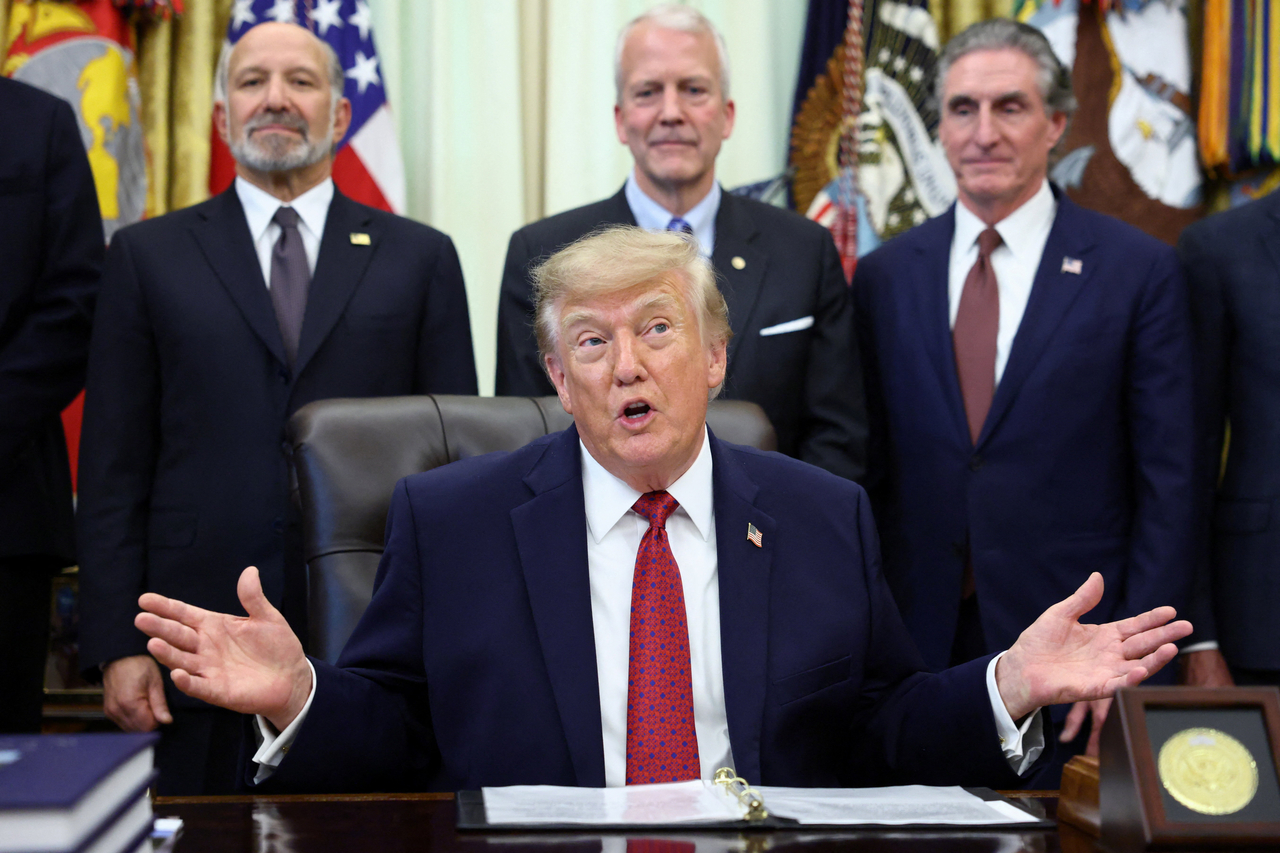
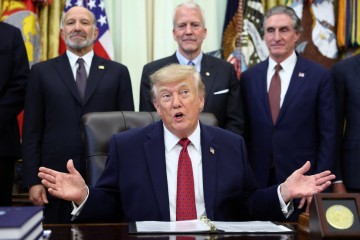
US President Donald Trump on Wednesday unveiled three projects under South Korea’s $200 billion investment commitment to the US, covering a Texas gas-fired power complex, a framework for eight nuclear reactors and a review of an LNG project in Alaska.
The commitment is part of Seoul’s broader $350 billion US investment package, agreed alongside last year’s bilateral trade deal. Under the agreement, Washington lowered tariffs on most South Korean goods to 15 percent.
"We're thrilled to announce one of the largest energy infrastructure investments in American history thanks to the billion dollars to build a six gigawatt power generation facility in Texas, eight new large scale nuclear power plants and, at long last, Alaska liquefied natural gas pipeline, that's a big one," Trump said.
"The colossal package of investments we are announcing today is a major step toward securing our critical energy supply chain ensuring American energy dominance and making our partnership with South Korea and the entire Pacific region stronger than ever before."
The Texas development has been selected as the first formal investment under the agreement. The nuclear plan sets a framework requiring separate approval for each plant, while the two governments have agreed to review participation in the Alaska plans.
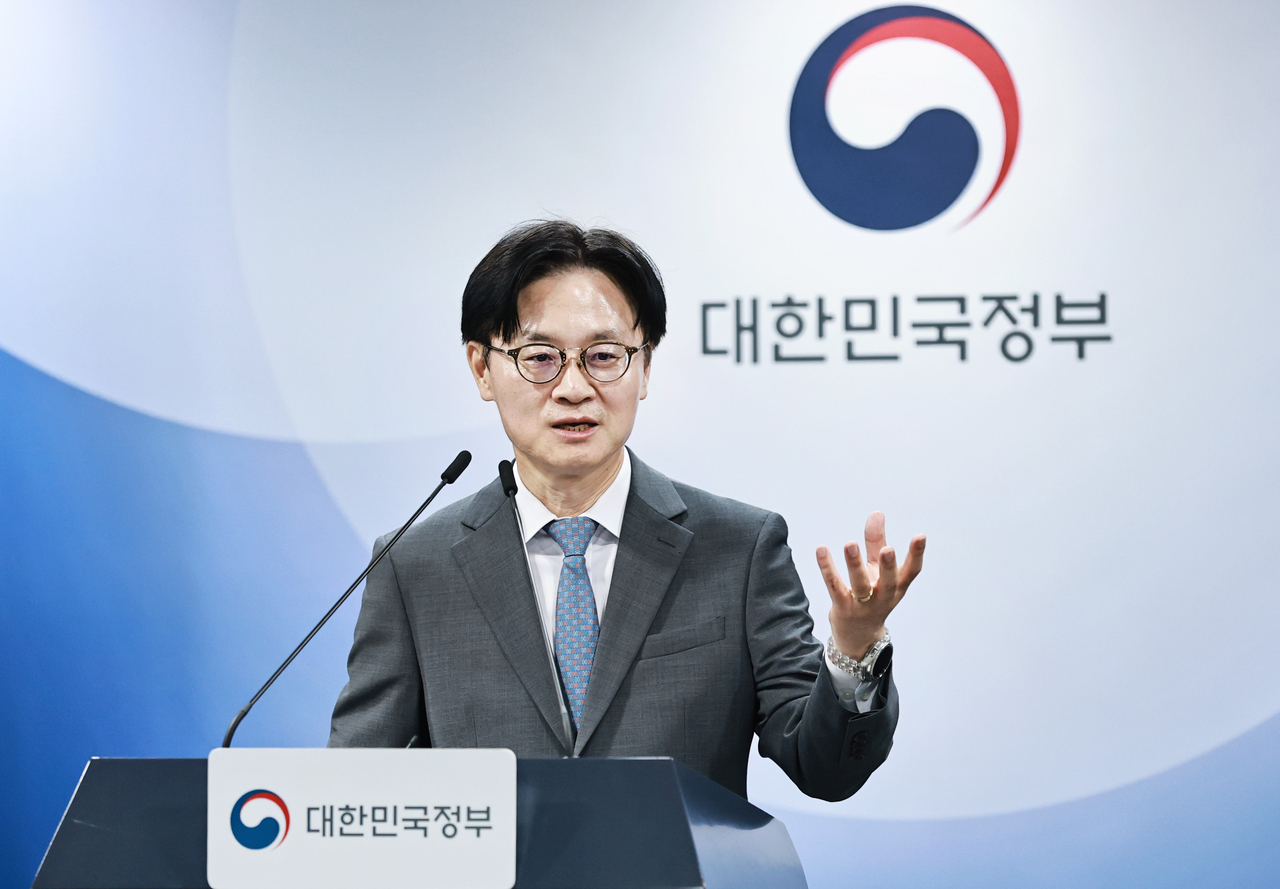
South Korea's Industry Minister Kim Jung-kwan underscored how recovering the investment was Seoul's central test for determining commercial reasonableness.
“Because taxpayers’ money is at stake, we approached the negotiations determined not to waste a single won,” Kim said at a press briefing on Sept. 22, after reporting to the National Assembly about the projects.
“We put commercial reasonableness and the national interest first, closely examining each project’s returns and risks, the prospects for recovering the investment and opportunities for Korean companies.”
Texas gas power plant
Named Project Star, the Texas development calls for a $22.3 billion, 6,472-megawatt combined-cycle gas power complex in Encinal that will supply electricity directly to nearby AI data centers, according to Seoul's industry ministry. Its first phase is expected to begin commercial operations in 2029, with the full complex scheduled to come online by 2032.
US property developer Related Companies and power producer NextEra Energy will lead the project, while Texas-based Lewis Energy Group will provide the site, natural gas, water and other infrastructure.
Kim said the caliber of the participating companies, rising power demand and interest from several prospective data center customers gave Seoul confidence that the project could generate stable returns.
“One of our most important considerations was who was participating,” Kim said. “These are companies with strong reputations and proven track records that Korean builders have wanted to work with.”
Korean companies are expected to seek contracts for equipment, engineering, construction and long-term maintenance. Kim said the project would be allowing them to work with leading US developers and enter the American gas-power market, where they have had little direct presence.
The project has cleared the required committee reviews and been reported to the National Assembly.
Though its commercial viability remains under scrutiny, Kim said that the Texas plant was expected to generate nominal proceeds of more than twice the original investment over the recovery period, allowing Seoul to recoup both principal and compound interest.
“If the nominal return does not exceed twice the investment, it would not be enough to recover the principal and interest,” Kim said. “Our calculations show that recovery should not be a problem.”
Nuclear plant construction
The second project, Project Power, is a nuclear cooperation framework that could allocate up to $120 billion to eight large reactors in the US. The proposed fleet consists of two Korean-designed APR1400 units and six Westinghouse AP1000s.
Construction would proceed in three stages, beginning with two AP1000s, followed by two APR1400s and two more AP1000s, and finally another two AP1000s. The two governments, Westinghouse, Korea Electric Power Corp., and Korea Hydro & Nuclear Power are expected to sign the framework agreement.
The APR1400s would be the first Korean-designed commercial reactors to be built in the US. A previous settlement between Westinghouse and the Korean companies had blocked the model’s entry into the American market, but the latest negotiations created a path for its inclusion.
Korean construction and equipment companies would also participate in the AP1000 projects, expanding their role in Westinghouse’s supply chain and positioning them for joint bids in other countries.
“Westinghouse has reactor designs and intellectual property, but it needs engineering, construction and equipment suppliers to put them into operation. Korea is a strong option,” Kim said.
He said the partnership could strengthen Westinghouse’s ability to deliver projects while opening US and European markets to Korean builders and suppliers.
The proposed allocation comprised about $100 billion in construction costs and $20 billion in contingency reserves. Investment would be capped at $30 billion for each group of two reactors, including $5 billion in reserve funding.
The countries also agreed to cooperate on an advance payment of up to $10 billion by year-end to secure components with long manufacturing periods, including reactor vessels, steam generators and reactor coolant pumps. Any payment would require a commercial review and compliance with South Korean legal and parliamentary procedures.
Separately, Korean investors, including private companies and state-run firms Kepco and KHNP, will pursue a combined stake of at least 5 percent but below 10 percent in Westinghouse. The price and other terms remain under negotiation.
The framework agreement does not authorize the construction of all eight reactors. Sites, ownership structures and schedules have yet to be determined, and each project will require a separate commercial assessment and domestic approval.
Alaska LNG
The third project, Project North, concerns South Korean participation in an Alaska LNG development. It would transport natural gas from Alaska’s North Slope through a 1,250-kilometer pipeline to a liquefaction and export terminal in Nikiski.
Trump said the pipeline was expected to deliver nearly 4 billion cubic feet of natural gas per day, helping strengthen the United States’ position as the world’s largest natural gas producer and exporter.
“This alone will be one of the largest energy projects in American history and a gigantic win for the people of Alaska,” Trump said. “It will create up to 12,000 construction jobs immediately and 100 operational jobs.” He added that the project would lower energy costs for Alaskan households.
US Commerce Secretary Howard Lutnick said more than $50 billion would be invested for the Alaska LNG project.
South Korea maintains that the project must be commercially viable. Seoul is nevertheless willing to review the Alaska proposal because of the country’s energy-security risks, the industry minister said.
“It is true that the project has a weaker commercial case,” Kim said. “But from a strategic perspective, we need to examine it because South Korea’s gas supply routes are highly vulnerable.”
He cited risks surrounding the Strait of Hormuz, the Strait of Malacca, the Taiwan Strait and the Panama Canal, as well as uncertainty over Australian and Russian supplies.
“We have agreed with the United States that we will not proceed unless the project is commercially viable,” Kim said.
If Seoul decides to participate, Washington has offered tariff reductions on materials such as steel, favorable conditions for Korean suppliers, viable long-term purchase terms and priority access to the LNG. Seoul said the project could diversify Korea’s gas supplies, though its cost, timetable and investment structure remain undecided.
Profit-sharing and safeguards
Together, the Texas, nuclear and Alaska projects are expected to take up most of South Korea’s $200 billion investment commitment. An umbrella special-purpose company will manage the investments, with separate subsidiaries overseeing individual projects.
South Korea and the US will split returns equally until Seoul recovers its total principal plus deemed interest across the portfolio. The distribution will then shift to 10 percent for South Korea and 90 percent for the US.
Kim described the arrangement as a key safeguard, saying pooled returns would allow stronger earnings from one project to offset weaker performance elsewhere. The interest on Seoul’s recoverable amount will be based on the yield of 20-year US Treasury bonds plus a project-specific margin.
The operating agreement will make Seoul’s investment limits of $20 billion annually and $200 billion overall legally binding. South Korea will also receive financial and spending reports and hold consent rights over major changes affecting its interests.
Any remaining funds could be directed to smaller strategic projects involving critical minerals or spent nuclear fuel reprocessing.
“If even a small amount remains, I would like to use it for smaller but still meaningful projects in strategic sectors,” he said.
herim@heraldcorp.com